Vũ Tú Left Physics for Stone—and Found a New Language
The Vietnamese valedictorian chose direct stone carving and found a language between science, devotion and risk.
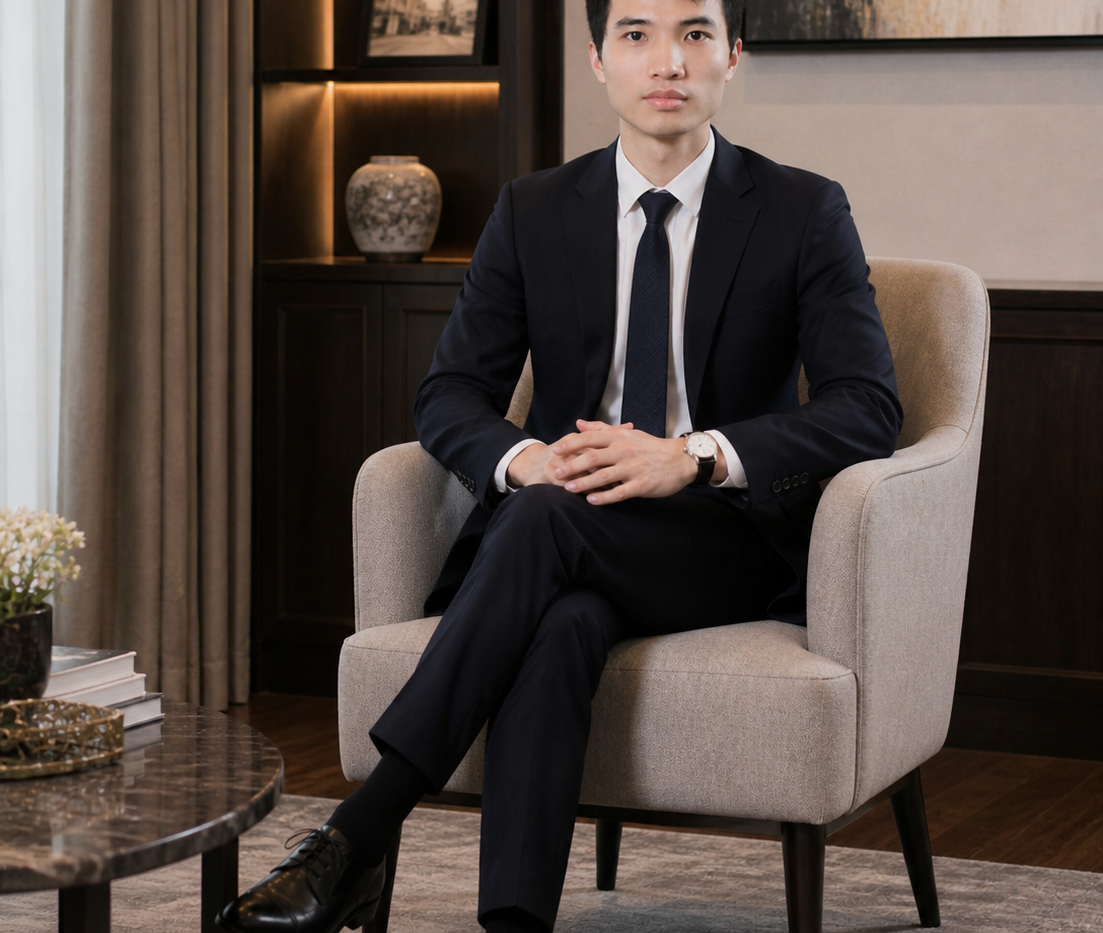
Vũ Tú did not take the expected route to sculpture. The Vietnamese artist studied physics, graduated as a university valedictorian and then turned toward stone—one of the least forgiving materials an artist can choose. His work now sits at a compelling intersection: scientific discipline, devotional imagery and the direct physical intelligence of carving.
From equations to stone
Born in Bắc Ninh in 1987, Vũ Tú trained in the natural sciences before developing his practice as a largely self-taught sculptor. That first education has not disappeared. It survives in the way he talks about composition, light, depth and material: not as separate aesthetic effects, but as forces that must find balance inside a single object.
The career change sounds dramatic, yet physics and sculpture share an attention to structure. Both ask what a material can hold, where tension gathers and how mass behaves in space. For Vũ Tú, the studio became another kind of laboratory—one in which observation passes through the hand.
Carving without a safety net
His signature approach is direct carving in monolithic stone, without relying on a full intermediate model. The method allows very little hesitation. Unlike clay, which can be added back, carved stone records each decision through removal. The artist must imagine the finished form while confronting the block that conceals it.
That discipline gives his work its central tension: precision without coldness. Vũ Tú’s subjects often draw from Buddhist, Christian and Vietnamese cultural imagery, where the material must carry spiritual presence as well as formal clarity. Stone can suggest permanence, but his task is to make it feel responsive—to let weight produce grace.
Tradition without imitation
Religious sculpture comes with an inherited visual language. Familiar gestures, symbols and proportions can make the work legible, but they can also trap an artist in repetition. Vũ Tú’s interest lies in the threshold between preservation and invention. He approaches traditional subjects with an awareness of modern spatial design and the analytical habits of scientific training.
That combination is why his practice deserves attention beyond the categories of craft or devotion. The work asks how an artist can honor a living tradition without treating it as a museum object. It also asks whether contemporary art’s hunger for the new can make room for slowness, mastery and spiritual purpose.
Why Vũ Tú is one to watch
The global art conversation often reaches Vietnam through painting, photography and installation. Stone sculpture moves at another tempo. It is expensive to produce, hard to transport and impossible to fake quickly. Those limitations may be exactly what make Vũ Tú’s trajectory distinctive. His medium demands commitment before attention arrives.
His next chapter will depend on how the work enters wider exhibition contexts and how individual sculptures hold their force beyond biography. That is precisely why he belongs in a watchlist now: the practice has a clear internal logic, while its international reception is still being written. But the proposition is already strong: a valedictorian leaves the certainty of physics, chooses a material that refuses correction and tries to make belief visible through mass. Discovery begins with that unlikely decision. The rest is in the stone.
Sources
Vũ Tú: curriculum vitae and biography
Vietnam Craft Villages Association: Vũ Tú and the meeting of intellect and creativity
Buddhism Today: Vũ Tú’s path into Buddhist stone sculpture