
At The Met, Fashion Finally Takes the Main Gallery
With Costume Art, clothing moves beside the Great Hall—and the dressed body enters the museum’s main argument.
Fashion is art is an argument museums have flirted with for decades. In 2026, the Metropolitan Museum of Art stopped whispering it. Costume Art places the dressed body at the center of the institution, inside nearly 12,000 square feet of new galleries beside the Great Hall—not underground, not on the decorative edge, but in the main current of art history.
The body enters the Great Hall
The Costume Institute’s spring exhibition pairs garments with painting, sculpture, works on paper and decorative arts from across The Met’s collection. The gesture is deceptively simple. A dress and a portrait placed together change the way each is read: the garment becomes a structure for identity, while the figure in the artwork becomes visibly dressed rather than merely depicted.
The exhibition is also the inaugural show in The Met’s new Condé M. Nast Galleries. Their location matters. Fashion has long drawn some of the museum’s largest audiences, yet the department’s annual exhibitions were physically separated from the Great Hall. Now clothing occupies a permanent, prominent architectural position within the museum.
Beauty is not one body
Costume Art examines the body in many states: idealized, abstracted, exposed, aging, pregnant, disabled and otherwise excluded from fashion’s narrowest fantasies. The dressed body becomes less a mannequin for trends than a record of how culture decides who can be visible and on what terms.
That shift is more radical than a glamorous room full of gowns. Fashion images often edit the body toward a single aspirational type. Museums have their own inherited hierarchies, repeatedly centering certain forms as universal. By drawing attention to bodies at the margins of those traditions, the exhibition asks whether beauty expands when the frame does.
Why an old gown can feel urgent
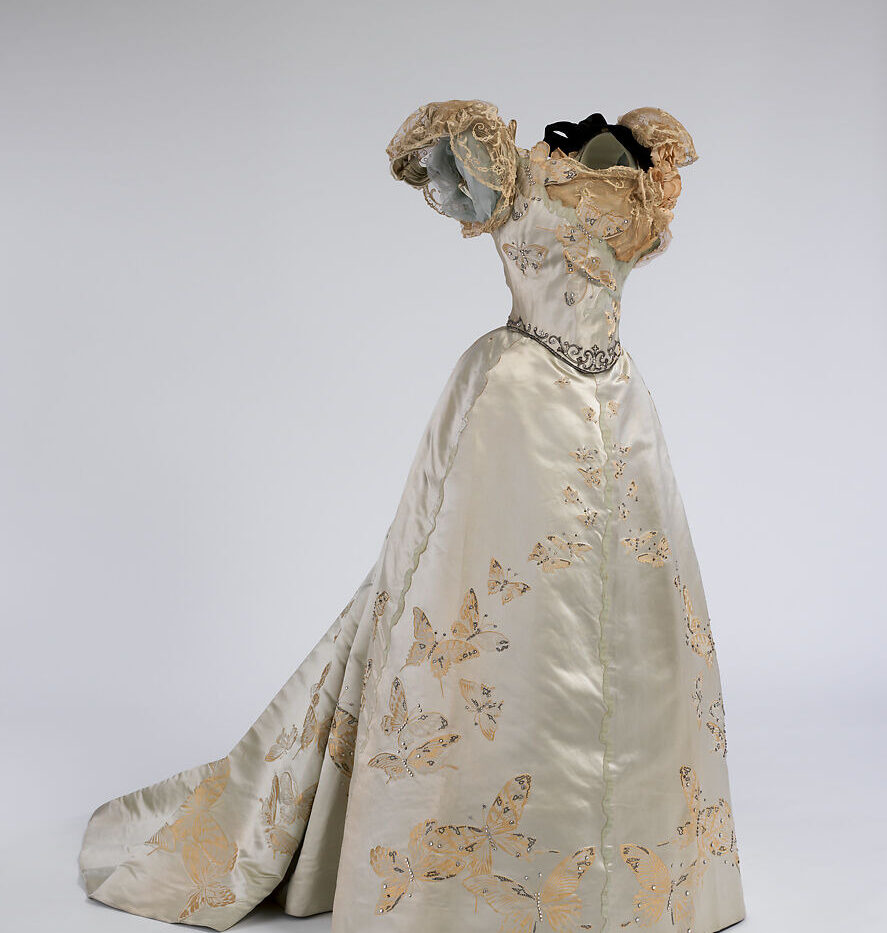
A House of Worth ball gown from 1898 offers one answer. Its silk was woven to the dimensions of the skirt so that butterflies rise from the hem and diminish as they climb, creating the illusion that they are disappearing into distance. The design is not only luxurious; it is spatial. The body becomes a moving landscape.
Look closely and the gown speaks to contemporary fashion’s favorite questions: Can fabric behave like architecture? Can surface create movement? Can clothing alter the space around a person? The object is more than a relic of elite society. It is a technology of attention, engineered to change how someone enters a room.
Desire, with its eyes open
DIXED readers do not need fashion to be defended as serious. They already understand the intelligence of a silhouette and the emotional charge of material. What Costume Art offers is a larger field of view. Clothing can be desirable and analytical, sensuous and political, intimate and monumental at once.
The exhibition remains on view through January 10, 2027. Its most lasting effect may be architectural rather than seasonal: fashion now has a visible home near the museum’s front door. The message is not that every garment belongs on a pedestal. It is that the dressed body has always shaped what art allows us to see—and that looking at fashion closely can change how we look at everything else.
Sources
The Metropolitan Museum of Art: Costume Art
The Met: Inside the exhibition
The Met: House of Worth ball gown, 1898